
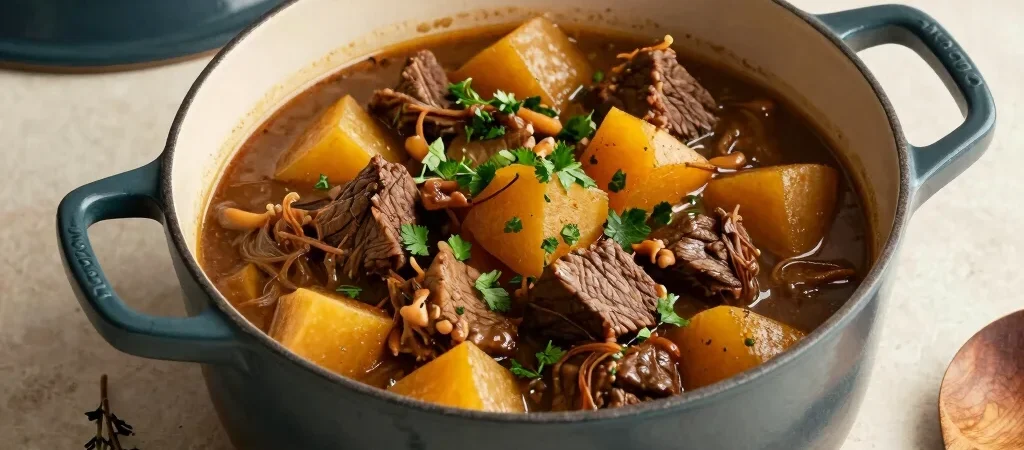
A rich, bubbling stew is often viewed as a weekend project reserved for chilly afternoons. However, understanding how key ingredients brown and interact allows you to build complex flavors efficiently during busy weeknights. With step-by-step guidance on browning and liquid ratios, supper comes together with minimal active intervention.
Building Depth with High Heat Searing
The signature richness of a traditional stew begins long before liquid enters the pot. Searing your protein or sturdy root vegetables in a well-seasoned iron skillet creates a deeply browned fond on the bottom surface. Deglazing those caramelized bits with bone broth or dry wine unlocks layers of natural flavor that slow simmering then unifies.
Choosing Sturdy Aromatics and Herbs
Layering aromatics at the right moment preserves their distinct character throughout the cook time. Hardier herbs like thyme, rosemary, and bay leaves release their essential oils steadily during a forty-minute simmer. Delicate greens or fresh garlic paste should be stirred in during the final moments of cooking to keep their bright, sharp notes intact.
Balancing Texture and Natural Thickeners
Relying on reduced root vegetables rather than heavy cornstarch yields a silky sauce that clings naturally to every spoonful. Simmering diced potatoes or sweet parsnips alongside the stew slowly releases gentle starches into the braising liquid. This produces a wholesome texture that warms the table and satisfies the whole family.