
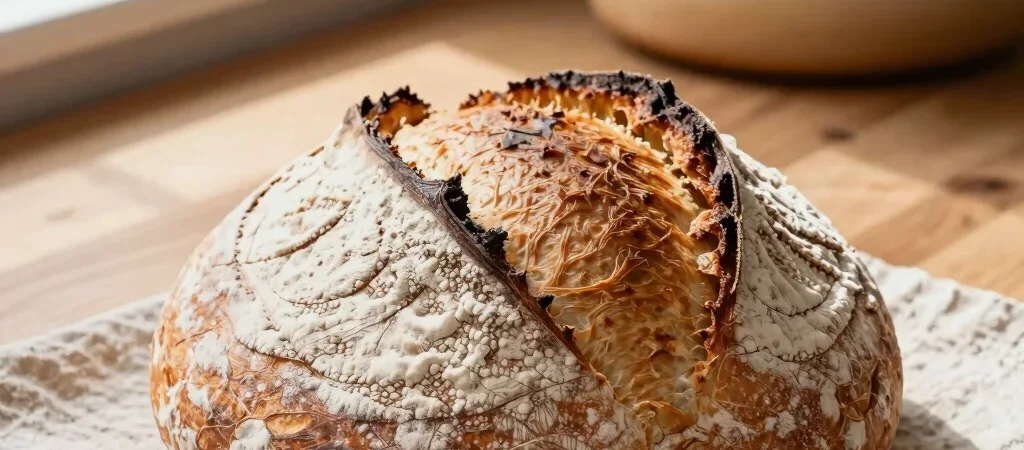
Baking bread at home often feels intimidating when recipes overcomplicate the natural chemistry of fermentation. Achieving a crisp, golden-crusted loaf with a tender interior does not require commercial ovens or specialty gadgets. With exact hydration ratios and simple patience, your home oven can produce hearth-quality loaves every morning.
Mastering the Four Fundamental Ratios
The foundation of reliable bread baking lies in baker percentages rather than volumetric cups. A classic hearth loaf relies on seventy percent hydration, which allows the gluten network to develop without making the dough unmanageable for hands. Flour selection provides the structural backbone, while two percent sea salt ensures both dough strength and rich flavor.
Creating Steam in the Home Oven
To duplicate the crisp exterior of a traditional bakery loaf, moisture control during the initial minutes of baking is vital. Preheating a heavy Dutch oven traps steam naturally evaporating from the dough, allowing the crust to expand fully before setting. Removing the lid during the final fifteen minutes lets dry heat turn the outer layer a deep mahogany.
Judging Doneness Beyond the Timer
Relying strictly on minute counts can be deceptive when kitchen temperatures fluctuate throughout the seasons. Tap the bottom of your finished loaf; a clear, hollow resonance confirms the interior crumb has baked through cleanly. Let the loaf rest on a wire rack for at least one hour before slicing so the internal structure stabilizes.